
What Are Gearbox Shift Solenoids and the Valve Body, and What Happens When One Fails?
What the valve body and shift solenoids do in an automatic gearbox, the signs one has failed, why it is not always a full overhaul, and how it is checked in Singapore.
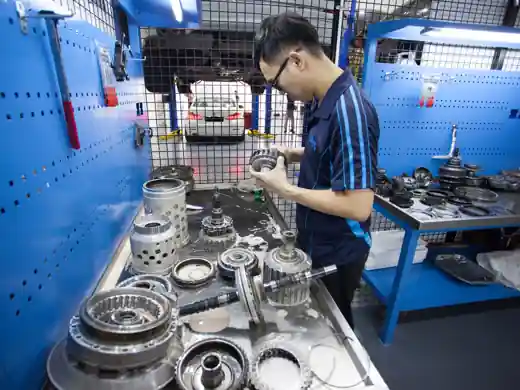
In short: the valve body is the hydraulic control centre of most automatic gearboxes, and the shift solenoids are the electric valves on it that tell the gearbox when to change gear. When a solenoid sticks or fails, or the valve body wears, you may see harsh or delayed shifts, the car staying in one gear, slipping, or a transmission warning light. These faults are not always a full overhaul, but a diagnostic is needed to know which part is at fault.
What does the valve body do?
Inside an automatic gearbox, gearbox oil (ATF) under pressure is what applies the clutches and brakes that select each gear. The valve body is a block of narrow oil passages and small valves that sends that pressure to the right place at the right time. Think of it as the gearbox's traffic controller for oil.
What are shift solenoids?
Shift solenoids are small electrically operated valves, usually mounted on the valve body. The gearbox control unit switches them on and off to decide which gear is selected and how smoothly the change happens. Some gearboxes also have solenoids that control line pressure or the torque converter lock-up. On many dual-clutch gearboxes, the solenoids and valves sit in the mechatronic unit. See CVT, dual-clutch or automatic for how the types differ.
What are the signs of a faulty solenoid or valve body?
- Harsh, delayed or flaring shifts, where the engine revs rise before the gear catches
- Stuck in one gear, often second or third, sometimes with weak acceleration (see limp mode)
- Slipping or no drive in one particular gear
- A transmission or check engine light, often with a stored fault code about a solenoid circuit or gear ratio
- Jerking between gears at low speed or when the gearbox is cold
These signs can also come from low or old ATF, a faulty sensor, a weak battery or internal wear, so treat them as a reason to test the gearbox and not as a diagnosis. Our pages for jerking when changing gear and gearbox slipping cover the symptoms.
Why do solenoids and valve bodies fail?
- Old, dirty or overheated ATF. Fine debris and varnish can make small valves stick, and heat ages the fluid. More in our ATF guide.
- Electrical faults. A solenoid's coil, wiring or connector can fail, and low voltage can make the control unit store faults.
- Wear. Over many years, the valves and the bores they slide in can wear, so oil pressure leaks past where it should be held.
Does a faulty solenoid mean a full overhaul?
Not always. Some problems come from one part, such as a solenoid, a sensor, the valve body or a leaking seal, and can be repaired on their own. Others, such as worn clutch packs or internal damage, mean the transmission has to come out and be rebuilt. That is why the fault should be found before any decision. Driving on a slipping or stuck gearbox can spread the damage, so early checking usually costs less. A real Subaru Forester case, where a valve body solenoid was repaired instead of overhauling the gearbox, is in our P0971 article.
How do we find out which part is at fault?
- Read the transmission fault codes to see which circuit the control unit complains about.
- Check the ATF level and condition, and look for leaks.
- Test and inspect the gearbox, to see whether the fault is electrical, hydraulic or internal.
- Get the fault and the price explained before any repair starts. You decide.
Does Jacky repair these faults?
Yes. Jacky diagnoses, tests and inspects every car himself, and the repair work is done in the workshop. The pre-repair diagnostic is from S$30, you get the fault and the price before any work starts, and repairs come with a 6-month warranty. See gearbox repair for the steps, gearbox servicing for fluid changes, and free towing if the car cannot move.
Not sure what your gearbox needs?
Jacky diagnoses and tests the gearbox himself and tells you the fault and the price before any work starts. Pre-repair diagnostic from S$30.
Questions
What are the symptoms of a bad shift solenoid?
Can I drive with a faulty shift solenoid?
Does a bad solenoid mean I need a new gearbox?
Can changing the gearbox oil fix solenoid problems?
Related services
Gearbox Repair & Overhaul
We have a full range of diagnostic tools specialising in auto transmission to accurately identify the root cause.…
Learn more →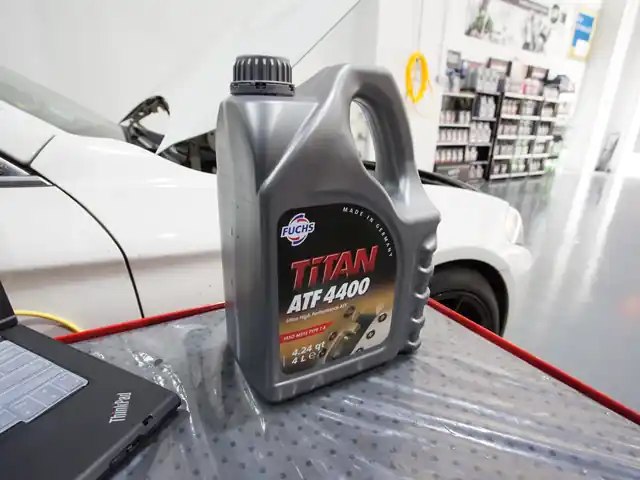
Gearbox Maintenance & Servicing
Regular servicing of the auto transmission is as important as servicing the engine. We only use the manufacturer’s…
Learn more →Related gearbox problems
Jerking or gears slipping
The car jerks when shifting up or down, slips in and out of gear, or pops into neutral while driving.
What it means →Engine revs but car doesn’t speed up
You press the accelerator, the engine revs climb, but the car is slow to pick up speed, or the gear seems to slip out for a moment.
What it means →Transmission check light on
The engine or transmission check light comes on while driving. Some cars also hold one gear (often called “limp mode”) to protect the gearbox.
What it means →More articles
Can You Tow an Automatic Car Without Damaging the Gearbox?
Is it safe to tow an automatic car with the wheels on the ground? Why it can damage the gearbox, when a flatbed is the safer choice, and what to do in Singapore.
Read article →25 October 2026Honda Hybrid DCT Code P2857: What the Odd Clutch Fault Means
Honda Freed, Vezel, Shuttle or Fit hybrid jerking with code P2857? What the odd clutch fault means on the i-DCD gearbox and why it needs a DCT specialist.
Read article →25 October 2026Subaru AT Oil Temp Light On? A Forester Case That Needed a Solenoid, Not an Overhaul
Subaru AT Oil Temp light on? A real Forester case with code P0971, why a valve body solenoid fault often needs a repair, not a full gearbox overhaul.
Read article →