
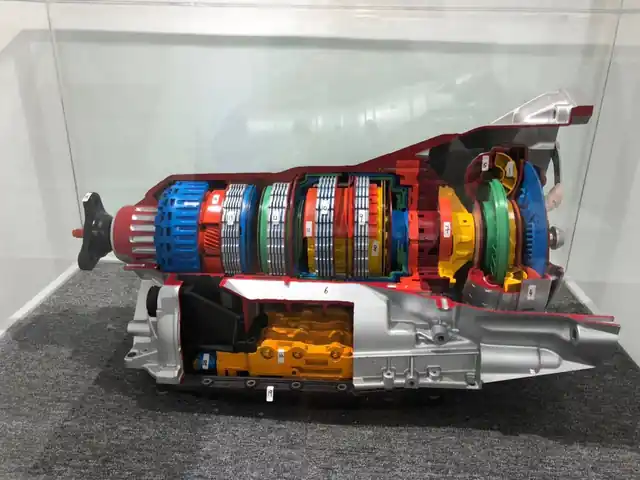
Most automatic cars in Singapore use one of three gearbox types: a conventional automatic with a torque converter, a CVT (continuously variable transmission) or a dual-clutch gearbox (Volkswagen group cars call theirs DSG). The quickest way to know yours is the owner's manual or the car's specification sheet. The type matters because each one fails differently and needs its own fluid.
What is a conventional automatic gearbox?
A conventional automatic connects to the engine through a torque converter, a fluid coupling that lets the car stop in gear without stalling. Inside are sets of gears, clutch packs and a valve body with solenoids that choose the gear. It is the oldest of the three designs and is used in many cars, from small family cars to large saloons.
What is a CVT?
A CVT has no fixed gears. It uses a steel belt or chain running between two pulleys that change size, so the ratio changes smoothly. When you accelerate, the engine speed often stays steady while the car speeds up, instead of rising and dropping with each gear change. Many Japanese cars use a CVT. Some hybrids use a different design that is also called an e-CVT, so check what your car has.
What is a dual-clutch (DSG) gearbox?
A dual-clutch gearbox is like two manual gearboxes in one, with one clutch for the odd gears and one for the even gears. A control unit, often called the mechatronic unit, changes gear by switching between the two clutches, so gear changes are very quick. Some dual-clutch gearboxes run their clutches in oil (wet), others run them dry. Honda’s hybrids use one too: see Honda hybrid DCT code P2857 for a real case.
How can I tell which gearbox my car has?
- Check the owner's manual or the car's specification sheet for the transmission type
- Search the make, model and year together with the word "transmission"
- Notice how it drives: a CVT has no gear steps, a dual-clutch shifts very quickly, a conventional automatic has smooth but noticeable shifts
- Ask Jacky: WhatsApp your car model and year
What problems does each type tend to show?
These are typical signs, not a diagnosis. The same symptom can have different causes, which is why Jacky tests the gearbox before quoting.
Conventional automatic
- Harsh, late or slipping gear changes
- A delay when you select Drive or Reverse
- Shudder at steady speed, which can point to the torque converter
CVT
- A whining or humming noise that rises with speed
- Engine revs rising without the car speeding up as it should
- Shudder or jerking when pulling away
Dual-clutch
- Juddering or jerking when moving off slowly, for example in a car park or traffic queue
- Hesitation before the car moves
- A gearbox warning on the dashboard, sometimes from the control unit
If you notice any of these, see gearbox slipping, car jerks when changing gear or gearbox noise.
Why does the gearbox type matter for repair and servicing?
- Fluid. Each type uses its own fluid. The wrong fluid can damage the gearbox, so always use the type your gearbox maker specifies. More in our ATF guide.
- Diagnosis. The tests and fault codes differ between the three designs, so the gearbox should be tested before any parts are changed.
- Cost. A conventional automatic, a CVT and a dual-clutch gearbox are built differently, so the repair options and costs differ too. Read gearbox overhaul vs replacement for the choices.
How does Jacky handle it?
Jacky diagnoses all three types. He tests the gearbox, explains what has failed and gives you the price before any work starts. The diagnostic is from S$30, repairs come with a 6-month warranty, and free towing is available during office hours if the car cannot move. See gearbox repair for how it works.
Not sure what your gearbox needs?
Jacky diagnoses and tests the gearbox himself and tells you the fault and the price before any work starts. Pre-repair diagnostic from S$30.
Questions
Is a CVT less reliable than a normal automatic?
Is DSG the same as a dual-clutch gearbox?
Can I use the same gearbox oil for any automatic?
How do I find out what is wrong with my gearbox?
Related services
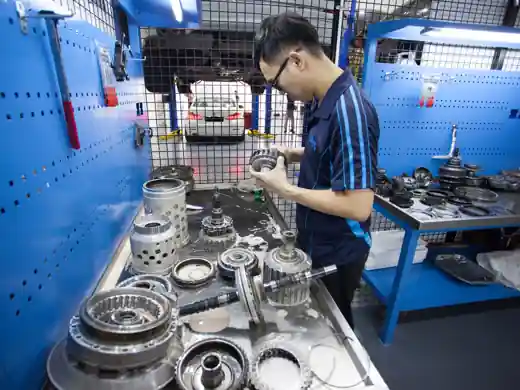
Gearbox Repair & Overhaul
We have a full range of diagnostic tools specialising in auto transmission to accurately identify the root cause.…
Learn more →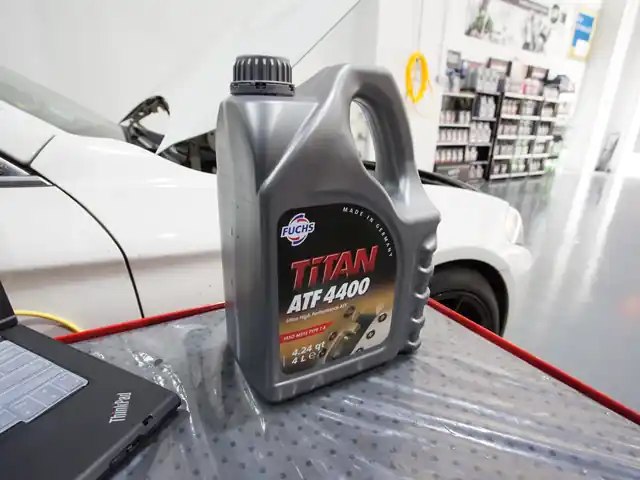
Gearbox Maintenance & Servicing
Regular servicing of the auto transmission is as important as servicing the engine. We only use the manufacturer’s…
Learn more →Related gearbox problems
Engine revs but car doesn’t speed up
You press the accelerator, the engine revs climb, but the car is slow to pick up speed, or the gear seems to slip out for a moment.
What it means →Jerking or gears slipping
The car jerks when shifting up or down, slips in and out of gear, or pops into neutral while driving.
What it means →Gearbox noise
A loud noise from the gearbox once the engine starts or while the car is moving.
What it means →More articles
Honda Hybrid DCT Code P2857: What the Odd Clutch Fault Means
Honda Freed, Vezel, Shuttle or Fit hybrid jerking with code P2857? What the odd clutch fault means on the i-DCD gearbox and why it needs a DCT specialist.
Read article →25 October 2026Subaru AT Oil Temp Light On? A Forester Case That Needed a Solenoid, Not an Overhaul
Subaru AT Oil Temp light on? A real Forester case with code P0971, why a valve body solenoid fault often needs a repair, not a full gearbox overhaul.
Read article →23 October 2026Gearbox Oil Flush or Drain and Fill: Which Is Better for Your Car?
Gearbox flush or drain and fill? How each method changes automatic transmission fluid, how much old fluid is left behind, and which suits your car in Singapore.
Read article →