
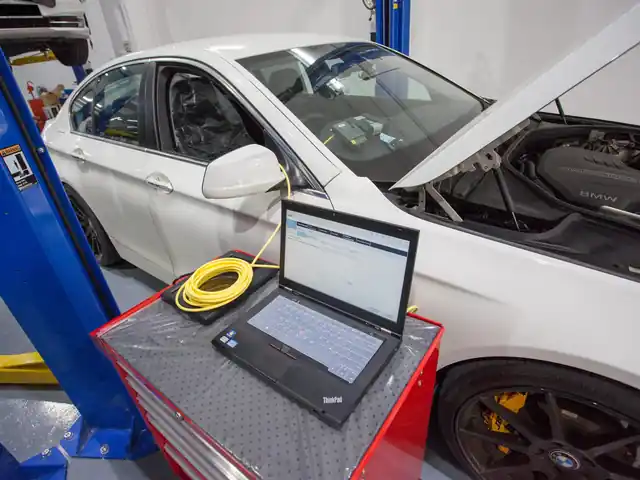
To check the gearbox of a used car, start it from cold, move through every gear while stationary, then drive it in town and on an expressway: shifts should be smooth and prompt, the revs should never rise without the car speeding up, and there should be no shudder, clunk, whine or warning light. Ask for the gearbox service records, and have the fault codes read if anything feels wrong.
Why check the gearbox separately?
The gearbox is one of the most expensive parts of a car to repair, and many faults only show once it is warm or under load. A general inspection report may grade the car without driving it far enough for a gearbox fault to show. A few extra minutes on the test drive can save you from buying someone else's repair.
What should I check before the test drive?
- Ask to start the car from cold. Some faults, such as a slow engagement into Drive, are easiest to feel when the gearbox oil is cold.
- Look for warning lights. The transmission, gearbox temperature or check engine light should come on briefly at start-up and then go off. A light that stays on means a stored fault. See transmission warning light.
- Look under the car. Fresh red or brown oil spots near the middle of the car can mean a gearbox leak. More on ATF leaks.
- Ask for the service records. Check whether the gearbox oil (ATF) has ever been changed, and when. Our ATF guide explains why it matters in Singapore traffic.
How do I test the gearbox on the test drive?
1. Engage each gear while stopped. With your foot on the brake, move from Park to Reverse to Neutral to Drive. Each should engage within about a second, with a light nudge, not a long delay or a hard clunk. 2. Pull away gently, then firmly. Shifts should be smooth at light throttle and quick under firmer throttle. Watch the rev counter: if the revs flare between gears, or climb without the car speeding up, the gearbox may be slipping. 3. Drive in stop-start traffic. Jerky low-speed shifts and shudders often show here first. See jerking or slipping between gears. 4. Hold a steady speed on an expressway. A vibration like driving over rumble strips at steady speed can point to the torque converter. Our torque converter guide lists the signs. 5. Try a carpark ramp. Moving off uphill puts load on the gearbox. Rolling back further than usual or a slow take-up is worth noting. 6. Listen. A whine or hum that changes with speed, or a clunk when you change direction, should be checked. 7. Check again when it is hot. Some faults only appear after 20 minutes or more of driving, so do not judge the gearbox in the first few minutes.
Do CVT and dual-clutch gearboxes feel different?
Yes, so judge each type on its own terms. A CVT has no gear changes: the revs stay fairly steady while the car speeds up, which is normal, but a shudder, a whine or revs that surge are not. A dual-clutch gearbox can feel slightly hesitant at walking pace, but it should not judder, clunk or hesitate badly when moving off. On a Honda hybrid, jerking from a stop can come with code P2857; see what the odd clutch fault means. Not sure which gearbox the car has? See CVT, dual-clutch or automatic.
When should I walk away?
- The transmission or gearbox temperature warning stays on.
- The car refuses to go into a gear, gets stuck in one gear, or drops into a limp mode. Our limp mode guide explains what that means.
- The gearbox clearly slips, or the oil smells burnt.
- The seller cannot say whether the gearbox has ever been serviced and will not allow a check.
None of these mean the car cannot be fixed. They mean the repair should be priced before you agree on the price of the car.
How can Jacky help?
If something did not feel right on the test drive, WhatsApp Jacky the car model and what you noticed. Jacky's pre-repair diagnostic starts from S$30: he reads the transmission fault codes, checks the gearbox oil and road-tests the car, then tells you the fault and the price before any work starts. Repairs come with a 6-month warranty.
Not sure what your gearbox needs?
Jacky diagnoses and tests the gearbox himself and tells you the fault and the price before any work starts. Pre-repair diagnostic from S$30.
Questions
What is the best way to test an automatic gearbox on a test drive?
Should I buy a used car if the gearbox oil has never been changed?
Can a fault code reader show gearbox problems?
Is a slight delay into Drive normal?
Related services
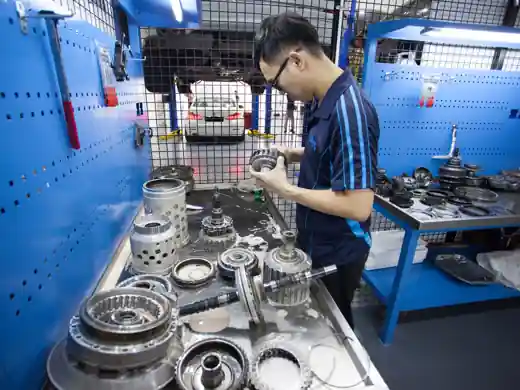
Gearbox Repair & Overhaul
We have a full range of diagnostic tools specialising in auto transmission to accurately identify the root cause.…
Learn more →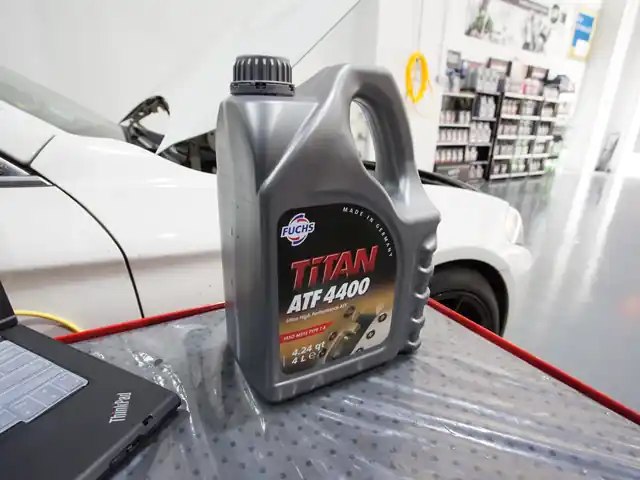
Gearbox Maintenance & Servicing
Regular servicing of the auto transmission is as important as servicing the engine. We only use the manufacturer’s…
Learn more →Related gearbox problems
Jerking or gears slipping
The car jerks when shifting up or down, slips in and out of gear, or pops into neutral while driving.
What it means →Engine revs but car doesn’t speed up
You press the accelerator, the engine revs climb, but the car is slow to pick up speed, or the gear seems to slip out for a moment.
What it means →Transmission check light on
The engine or transmission check light comes on while driving. Some cars also hold one gear (often called “limp mode”) to protect the gearbox.
What it means →More articles
Honda Hybrid DCT Code P2857: What the Odd Clutch Fault Means
Honda Freed, Vezel, Shuttle or Fit hybrid jerking with code P2857? What the odd clutch fault means on the i-DCD gearbox and why it needs a DCT specialist.
Read article →25 October 2026Subaru AT Oil Temp Light On? A Forester Case That Needed a Solenoid, Not an Overhaul
Subaru AT Oil Temp light on? A real Forester case with code P0971, why a valve body solenoid fault often needs a repair, not a full gearbox overhaul.
Read article →23 October 2026Gearbox Oil Flush or Drain and Fill: Which Is Better for Your Car?
Gearbox flush or drain and fill? How each method changes automatic transmission fluid, how much old fluid is left behind, and which suits your car in Singapore.
Read article →