
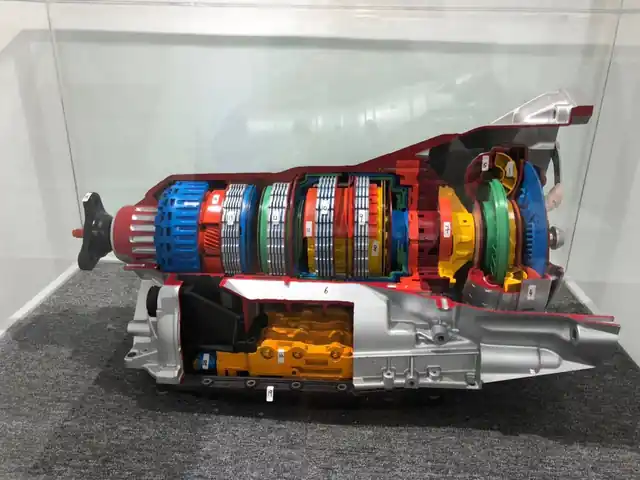
The common signs of a bad torque converter are a shudder or vibration at steady low speeds, engine revs rising without the car speeding up, a whining or rattling noise in gear, an overheating gearbox, and in bad cases weak drive or none at all. These signs can also come from other gearbox faults, so the torque converter should be tested before anything is replaced.
What does a torque converter do?
A torque converter is the fluid coupling between the engine and a conventional automatic gearbox. It lets the car stop in gear without stalling, multiplies the engine's pull when you move off, and on most modern cars locks up with an internal clutch at cruising speed so less power is lost. CVTs on many cars use one too; dual-clutch gearboxes do not. Not sure which you have? See CVT, dual-clutch or automatic.
What are the signs of a bad torque converter?
- Shudder at low or steady speed. A vibration that feels like driving over rumble strips, often at light throttle, when the lock-up clutch engages. More on vibration when accelerating.
- Slipping. The engine revs climb but the car does not speed up to match. See engine revs but the car doesn't speed up.
- Noise in gear. Whining, whirring or rattling that changes with engine speed, often louder when you move off.
- Overheating. A gearbox temperature warning, or fluid that smells burnt or looks dark.
- Weak or no drive. Slow pull-away, or the car will not move in Drive or Reverse even with the engine running.
- A warning light. The control unit can store a lock-up or slip fault and turn on a transmission or check engine light.
How do you tell a torque converter fault from other gearbox problems?
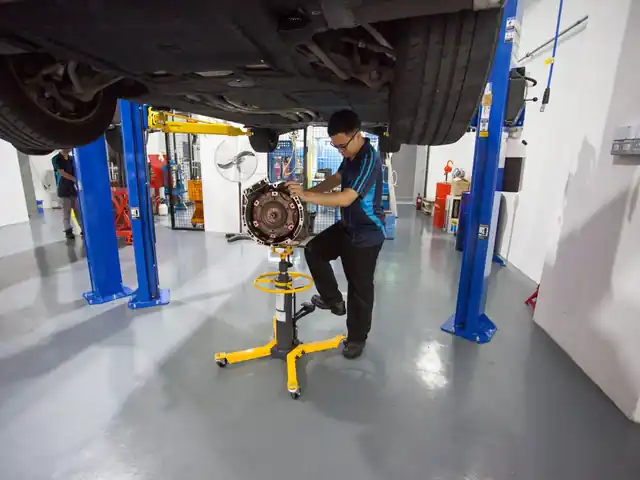
You can't reliably tell by feel alone. Low or old gearbox oil, a worn clutch pack, a shift solenoid, the valve body or even worn engine mounts can feel much the same. That is why the fault codes, the fluid and a road test come first. A torque converter is usually only replaced together with removing the gearbox, so it pays to be sure before that work starts.
Is it safe to drive with a bad torque converter?
Only gently and only as far as you need to. A slipping or overheating converter makes more heat, and heat breaks down the gearbox oil, which can spread the damage into the rest of the gearbox. If the oil also looks milky or pink, see what milky or pink gearbox fluid means. If the car shudders badly, overheats, smells burnt or will not drive, stop and do not force it. Jacky's free towing during office hours can bring the car in; before any other tow, see can you tow an automatic car.
What causes a torque converter to fail?
- Old or overheated gearbox oil (ATF). The converter works through the fluid, so worn fluid affects it directly. Our ATF guide covers how often to change it.
- Wear in the lock-up clutch. Stop-start traffic and heavy loads mean many lock and unlock cycles.
- Worn bearings or seals inside the converter, which can cause noise or leaks.
- A control fault. The lock-up is controlled by a solenoid and the gearbox control unit, so an electrical or valve body fault can look like a converter problem.
How does Jacky test the torque converter?
- Read the fault codes. The control unit records slip and lock-up faults.
- Check the gearbox oil. Level, colour, smell and any debris.
- Road-test the car. Jacky drives it to feel when the shudder or slip happens and how the gearbox shifts.
- Explain the fault and the price. You decide before any work starts.
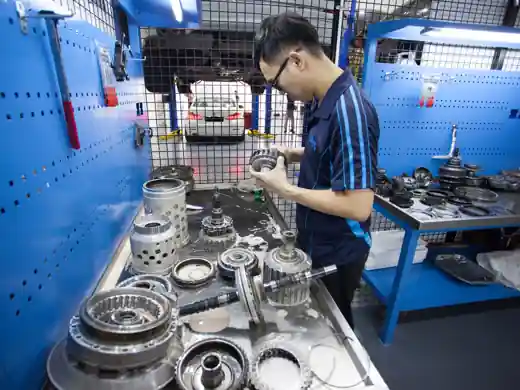
The diagnostic is from S$30, and repairs come with a 6-month warranty. If the converter does need work, see gearbox repair and overhaul for the options, or overhaul vs replacement to compare them.
Not sure what your gearbox needs?
Jacky diagnoses and tests the gearbox himself and tells you the fault and the price before any work starts. Pre-repair diagnostic from S$30.
Questions
Can a bad torque converter cause shuddering?
Can changing the gearbox oil fix a torque converter shudder?
Do dual-clutch gearboxes have a torque converter?
How much does a torque converter repair cost?
Related services
Related gearbox problems
Vibration
The car vibrates at high speed on low RPM, or when accelerating hard from a standstill.
What it means →Engine revs but car doesn’t speed up
You press the accelerator, the engine revs climb, but the car is slow to pick up speed, or the gear seems to slip out for a moment.
What it means →Gearbox noise
A loud noise from the gearbox once the engine starts or while the car is moving.
What it means →More articles
Honda Hybrid DCT Code P2857: What the Odd Clutch Fault Means
Honda Freed, Vezel, Shuttle or Fit hybrid jerking with code P2857? What the odd clutch fault means on the i-DCD gearbox and why it needs a DCT specialist.
Read article →25 October 2026Subaru AT Oil Temp Light On? A Forester Case That Needed a Solenoid, Not an Overhaul
Subaru AT Oil Temp light on? A real Forester case with code P0971, why a valve body solenoid fault often needs a repair, not a full gearbox overhaul.
Read article →23 October 2026Gearbox Oil Flush or Drain and Fill: Which Is Better for Your Car?
Gearbox flush or drain and fill? How each method changes automatic transmission fluid, how much old fluid is left behind, and which suits your car in Singapore.
Read article →