
Short answer: the habits that do the most harm to an automatic gearbox are changing between Drive and Reverse while the car is still rolling, holding the car on a slope with the accelerator instead of the brake, letting the gearbox oil (ATF) run old or low, ignoring early warning signs, and letting the gearbox overheat. Most of them are easy to change, and each one is explained below.
Why do habits matter so much for an automatic gearbox?
An automatic gearbox uses fluid pressure, clutches and, on many cars, a torque converter to change gear for you. Heat and shock loads are what wear these parts fastest. Singapore driving adds both: slow stop-start traffic, hot weather and steep multi-storey carpark ramps. The gearbox copes well with normal driving, but some habits add heat or a sudden jolt every time.
Which driving habits damage an automatic gearbox?
Shifting into Drive or Reverse before the car stops
Selecting Reverse while the car is still rolling forward, or Drive while it is rolling back, makes the gearbox stop and reverse the car's movement instead of the brakes. It is common in tight HDB carparks during a three-point turn. Come to a full stop with your foot on the brake, then change.
Putting the car in Park while it is still moving
Park locks the gearbox with a small pin. If the car is still moving, that pin takes the load. Stop fully first. On a slope, set the handbrake before you select Park, so the car rests on the handbrake rather than the pin.
Holding the car on a slope with the accelerator
Creeping up a carpark ramp or holding the car still on a hill with the accelerator makes the gearbox slip and build heat. On many dual-clutch gearboxes this wears the clutches quickly, and some cars show a warning when the clutch gets hot. Use the brake to hold the car, and use the hill-hold function if your car has one.
Revving in Neutral, then dropping into Drive
Revving the engine in Neutral and then selecting Drive sends a sharp shock through the gearbox, the drive shafts and the engine mounts. Pull away gently from idle instead.
Coasting downhill in Neutral
Coasting in Neutral does not save meaningful fuel on most modern cars, and you lose engine braking and some control. Leave the car in Drive, and use a lower gear or the manual mode on long descents if the car offers one.
Hard launches and constant full-throttle driving
Repeated full-throttle starts and very aggressive driving put the highest loads on the clutches and the torque converter. An occasional hard push is fine. Doing it at every traffic light shortens the gearbox's life.
Skipping gearbox oil changes and ignoring leaks
Old or low gearbox oil protects and cools less well, and it is a common cause of gearbox faults. Follow your car maker's schedule, which is often shorter for cars driven mostly in heavy traffic, and see how often to change gearbox oil in Singapore. A red or brown drip under the car is worth checking early, before the level gets low. See ATF leaking or low.
Letting the gearbox overheat
Heat is the main enemy of gearbox oil. On many automatic cars the gearbox oil is cooled through the engine's cooling system, so an engine that runs hot can also overheat the gearbox. Keep up the car's routine servicing so problems with the cooling system are found early; a general workshop such as Edwin Garage for routine servicing can take care of that, while Jacky looks after the gearbox itself. Towing or carrying loads beyond what your car is rated for also adds heat.
Driving on with a warning sign
A jerk when changing gear, a delay before the car moves, a burning smell or a transmission warning light are early signs. Small faults such as low fluid, a sensor or a solenoid often cost far less to fix when they are caught early than after the gearbox has been driven hard with them.
Is it bad to shift to Neutral at traffic lights?
On most automatic cars it is not needed, and it does not protect the gearbox. Staying in Drive with your foot firmly on the brake is what the gearbox is designed for. Shifting back and forth at every stop gains little, and each shift into Drive is one more engagement for the gearbox. If your car has an auto stop-start system, let it do its job in Drive. Follow your owner's manual where it says otherwise.
Do CVT and dual-clutch gearboxes need different care?
The basic habits are the same, but each type has its own weak spots. Dual-clutch gearboxes dislike creeping and holding on slopes, because the clutches slip and heat up. CVTs use a belt or chain and need the exact fluid the maker specifies. See CVT, dual-clutch or automatic to find out which gearbox your car has.
How do I know if my gearbox is already damaged?
Look out for:
- Jerks or thumps when the gear changes, or when you select Drive or Reverse
- Engine revs rising without the car speeding up
- A delay before the car moves after you select a gear
- A burning smell, or gearbox oil that looks dark or smells burnt
- A transmission or check engine light, or the car stuck in one gear (limp mode)
These signs can come from different faults, so treat them as a reason to test the gearbox, not as a diagnosis. Jacky reads the fault codes, checks the fluid, tests and road-tests the car, and tells you the fault and the price before any work starts. The diagnostic is from S$30, repairs come with a 6-month warranty, and free towing is available during office hours if the car should not be driven. More on the signs: jerking or gears slipping and gearbox limp mode.
Not sure what your gearbox needs?
Jacky diagnoses and tests the gearbox himself and tells you the fault and the price before any work starts. Pre-repair diagnostic from S$30.
Questions
Does changing from Drive to Reverse while moving damage the gearbox?
Is it bad to hold my car on a slope with the accelerator?
Should I put my automatic car in Neutral at traffic lights?
How can I make my automatic gearbox last longer?
Related services
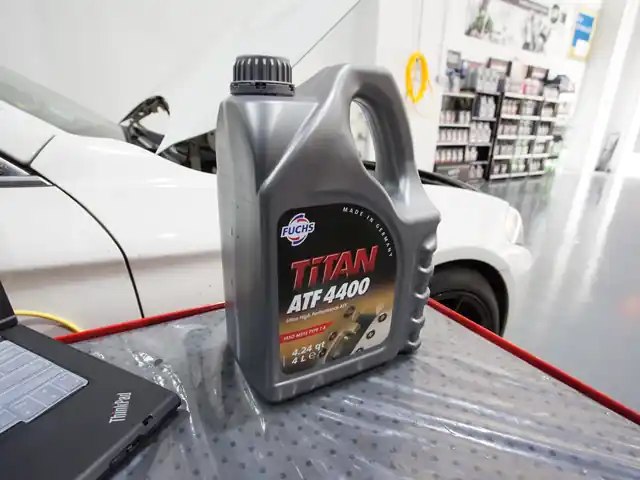
Gearbox Maintenance & Servicing
Regular servicing of the auto transmission is as important as servicing the engine. We only use the manufacturer’s…
Learn more →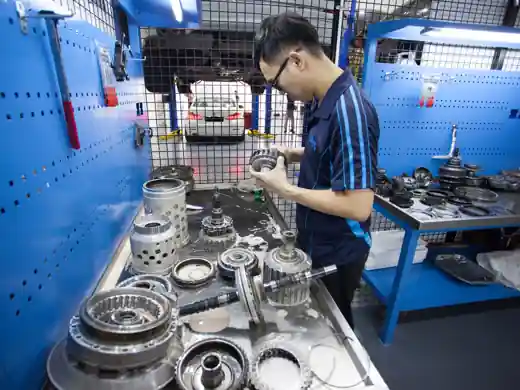
Gearbox Repair & Overhaul
We have a full range of diagnostic tools specialising in auto transmission to accurately identify the root cause.…
Learn more →Related gearbox problems
Jerking or gears slipping
The car jerks when shifting up or down, slips in and out of gear, or pops into neutral while driving.
What it means →Burning smell
A sharp burning smell after driving, especially in stop-start traffic or after a long climb, sometimes with slipping or harsh shifts.
What it means →ATF leaking or low
Bright red oil (ATF) stains on the floor after the car has been parked for a while.
What it means →More articles
Honda Hybrid DCT Code P2857: What the Odd Clutch Fault Means
Honda Freed, Vezel, Shuttle or Fit hybrid jerking with code P2857? What the odd clutch fault means on the i-DCD gearbox and why it needs a DCT specialist.
Read article →25 October 2026Subaru AT Oil Temp Light On? A Forester Case That Needed a Solenoid, Not an Overhaul
Subaru AT Oil Temp light on? A real Forester case with code P0971, why a valve body solenoid fault often needs a repair, not a full gearbox overhaul.
Read article →23 October 2026Gearbox Oil Flush or Drain and Fill: Which Is Better for Your Car?
Gearbox flush or drain and fill? How each method changes automatic transmission fluid, how much old fluid is left behind, and which suits your car in Singapore.
Read article →